









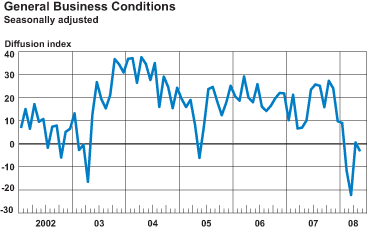
The Empire State Manufacturing Survey indicates that manufacturing activity in New York State deteriorated slightly in May. The general business conditions index fell below zero, to
-3.2. The new orders index remained close to zero, and the shipments index, while positive, declined markedly. The prices paid index exceeded its earlier record high by a wide margin, reaching 69.6, while the prices received index dipped several points. Employment indexes hovered near zero. Future indexes were generally low and down from last month's levels, suggesting that the outlook for the next six months remains subdued, particularly for employment.
Supplementary questions in the May survey focused on past and expected changes in the prices that firms pay for inputs and the prices that they charge their customers. Respondents estimated that the prices they paid had risen 8.7 percent, on average, over the past twelve months, and they expected such prices to rise by an average of 6.8 percent over the next twelve months. In contrast, firms' selling prices were reported to have risen by an average of just 2.9 percent over the past twelve months, but were expected to accelerate for a 4.1 percent increase over the next twelve months.
Business Activity Declines
After a sharp rebound in April from depressed readings in February and March, the general business conditions index in May slipped back below zero, to -3.2. Roughly 23 percent of respondents reported that conditions had improved over the past month, while 27 percent reported that conditions had deteriorated. The new orders index, at -0.5, remained close to last month's level. After a sharp increase in April, the shipments index gave up much of the ground it had gained, falling to 4.6. The unfilled orders index held steady at -4.4. The delivery time index rose to zero, and the inventories index remained below zero, at -6.5.
Prices Continue to Escalate
The prices paid index rose sharply to a record-high 69.6, with 71 percent of respondents reporting price increases, up from 59 percent of respondents in April. In contrast, the prices received index fell 6 points to 15.2. Employment indexes were little changed from last month, with the indexes for the number of employees and the average workweek remaining near zero at 1.1.
Outlook Remains Subdued
Future indexes pointed to a guarded outlook for the next six months. The future general business conditions index, while somewhat above last month's level, was low by historical standards, at 23.9. The future new orders and shipments indexes both crept downward to relatively low levels. The future prices paid index rose for a third consecutive month, to 64.1, while the future prices received index dipped to 30.4. The employment outlook was particularly weak: the future index for number of employees was relatively low, at 7.5, and the future average workweek index fell below zero for the first time in the survey's history. The capital expenditures index remained near its April level, at 13.0, and the technology spending index slipped to 5.4, its lowest level in several years.

